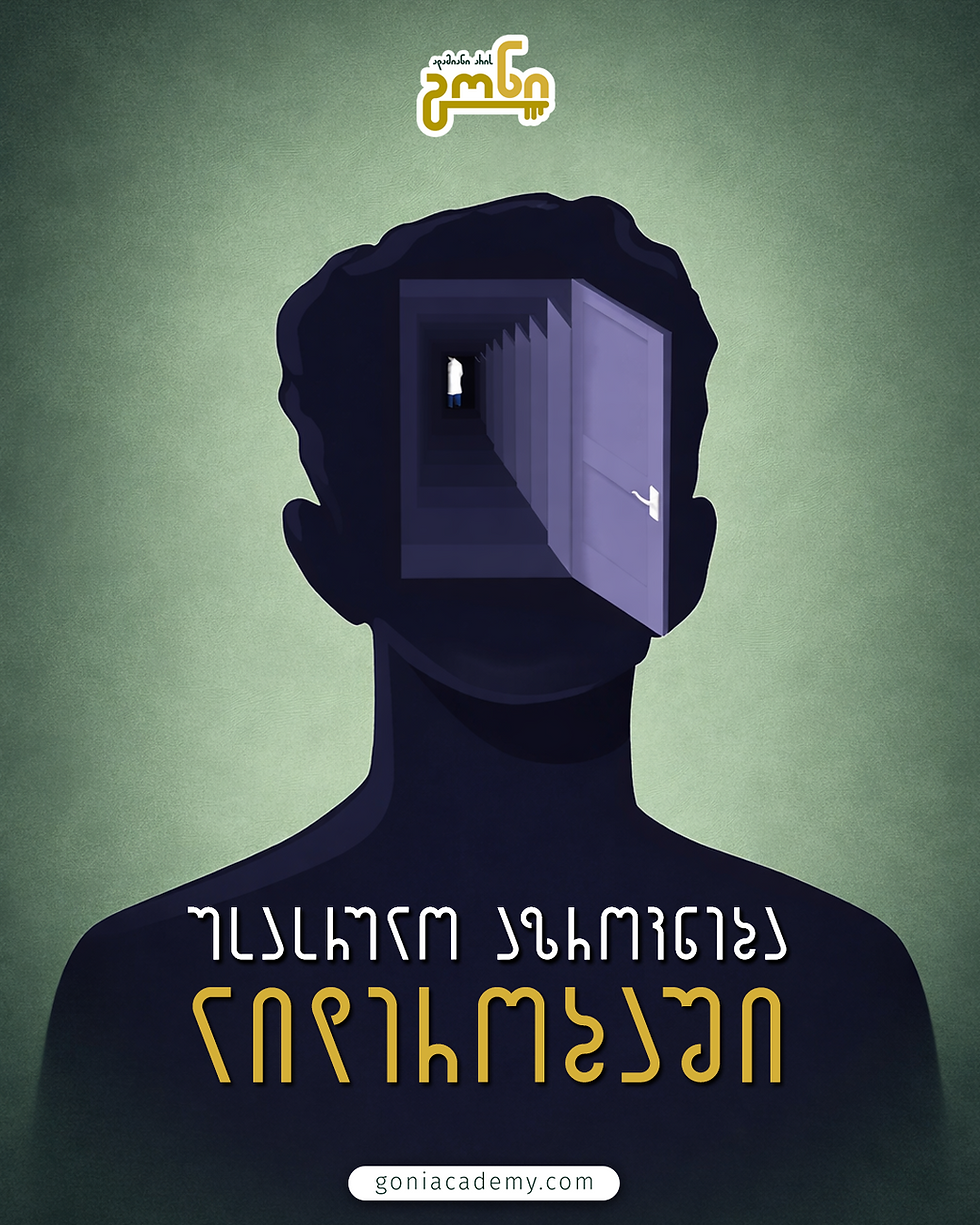
Kafka’s The Metamorphosis and Organizations: What Happens When a Person Is No Longer Useful to the System?


What happens when a person is no longer useful to the system? Do they remain a person, or do they simply become a burden?
It may sound unusual, but Franz Kafka’s The Metamorphosis offers a fascinating perspective on leadership and management. The story invites us to reflect on how we perceive people when their role, capabilities, or circumstances change.
Kafka’s The Metamorphosis begins with one of the strangest and, at the same time, most symbolically powerful openings in literature: one morning, Gregor Samsa wakes from troubled dreams to discover that he has been transformed into a gigantic insect.
Yet Kafka’s central question is not why Gregor has turned into an insect.
The real drama begins when we witness how others react to his transformation.
Before his metamorphosis, Gregor Samsa was the main provider for his family — responsible, hardworking, and deeply committed to supporting those around him. His life revolved almost entirely around work and providing for his family. To some extent, his very identity had become tied to this role.
But after his transformation, everything changes rapidly. His family gradually loses its compassion for him. His significance begins to disappear. The person who was once indispensable suddenly becomes a burden.
Here, Kafka reveals an important social reality: a person’s value is often determined not by who they are, but by the function they perform.
As long as Gregor worked and provided for his family, he mattered. The moment he lost that function, his human worth itself seemed to be called into question.
This idea becomes particularly relevant when we connect it to organisations and human resource management. Perhaps it is no coincidence that I found myself reading Kafka from this perspective. My professional and academic interests have long centred on management and leadership, and I often try not to confine my thinking about these subjects to professional contexts alone. Instead, I also look to literature for ideas and metaphors that can help us better understand the relationships between people, organisations, and power.
For this reason, The Metamorphosis is more than a literary work to me. It can also be read as a metaphor for what happens when a person’s role or function within a system changes.
We can observe similar dynamics in modern organisations. People are often valued as long as they remain productive, effective, and useful to the functioning of the system. Their value may become closely associated with performance, results, and organisational efficiency.
But real life is not always stable.
People experience stress. Sometimes they make mistakes. Sometimes they reach the point of burnout. Health problems or personal crises may arise. Sometimes their professional path simply changes.
It is often in these moments that the true nature of an organisational culture becomes visible: Does the system see a person merely as a resource, or as a human being?
And this leads to an important question:
Do we see only the role a person performs, or do we see the person as a whole?
For me, the answer to this question marks one of the most important distinctions between management and leasership. Management manages functions. Leadership sees people.
3 Symbols in The Metamorphosis That Also Apply to Organizations
On the surface, Kafka’s story may seem like an absurd tale, but its symbolism runs much deeper. Several of its symbols are particularly interesting when viewed through the lens of organisational life and workplace dynamics.
Transformation into an Insect — The Dehumanization of the Individual
Gregor Samsa’s transformation into an insect is often interpreted as a symbol of alienation and dehumanization. The insect can be understood as a metaphor for what happens when a person is reduced to nothing more than a function, a resource, or an instrument.
In organizations, we often use the term “human resources.” It is a perfectly standard professional concept, yet Kafka’s story reminds us of a potential danger: seeing people only as resources rather than as human beings.
When systems value people primarily for their productivity, individuals may gradually lose their sense of human identity within the organization and become reduced to little more than “roles” or functions to be performed.
The Locked Room — Isolation
Throughout the story, Gregor Samsa remains almost entirely confined to his room. Symbolically, this space represents isolation.
What makes this particularly significant is that Gregor’s isolation is not merely physical — it is also social and emotional. He gradually loses his connection with his family, with the outside world, and ultimately with his own sense of humanity.
In an organisational context, this can remind us how easily someone can become professionally isolated, particularly when they no longer meet the expectations of the system.
People who are struggling, experiencing difficulties, or simply choosing a different path can gradually find themselves pushed to the “periphery” of an organisation.
The Family’s Attitude — Conditional Value
One of the most powerful aspects of The Metamorphosis is the way Gregor’s family gradually changes its attitude toward him.
As long as Gregor worked and provided for the family, he was indispensable. But the moment he lost that function, his very existence became a problem.
This points to an important social mechanism — conditional value.
The same phenomenon can exist within organisations: a person is valued to the extent that they produce results. Yet Kafka shows us that when a person’s worth becomes entirely dependent on their function, relationships gradually begin to lose their human foundation.
The Metamorphosis as a Metaphor for Organizational Culture
Kafka’s story can also be read as a metaphor for organizational culture.
Organizational culture shapes how a system perceives people, how it responds to change, and how it treats employees during moments of difficulty or crisis.
In some organizations, people are viewed primarily through the lens of performance — as functions expected to operate efficiently and consistently deliver results.
In others, employees are seen as whole individuals, with their own strengths, vulnerabilities, potential for growth, and human needs.
In Kafka’s story, the family’s treatment of Gregor can, to some extent, remind us of a system focused almost entirely on function.
Once the function disappears, the relationship changes as well.
This raises an important question for any organization: What happens when a person is temporarily unable to perform their role?
It is precisely in moments like these that the true nature of an organizational culture becomes visible.
Kafka and the “Performance Culture” of Modern Organizations
Modern organizations often emphasize results, efficiency, and productivity. This is entirely natural — every organization is ultimately expected to achieve results.
However, in recent years, increasing attention has been given to what is often described as a “performance culture” — an environment in which employees’ value is measured almost entirely by their results.
In such cultures, people are under constant pressure to remain efficient, competitive, and productive. This can be a powerful source of motivation, but it also carries a risk: a person may gradually become reduced to little more than a producer of results.
Kafka’s story seems to anticipate this danger. When a system is built entirely around productivity, there is a risk that a person’s value will be reduced to the function they perform.
...And this brings us to an important question:
Can an organization remain effective without losing its humanity?
And Yet, What Does Leadership Mean After Kafka?
Kafka’s The Metamorphosis reminds us that change is a natural part of life. People change. Their roles change. Their capabilities change. Sometimes those capabilities may temporarily decline or become limited.
But it is precisely in such moments that the true meaning of leadership becomes visible.
Management manages systems. Leadership sees people.
Ultimately, the quality of any organization is defined not only by the results it achieves, but also by how it treats people when they need understanding the most.
And perhaps this is why Kafka’s story still resonates so powerfully today. Because the greatest tragedy is not the metamorphosis itself.
The real tragedy begins when a person loses the environment that still sees them as human.